Nebulae as Stellar Nurseries:
* Composition: Nebulae are vast clouds of gas (primarily hydrogen and helium) and dust. This material is the raw ingredient for stars.
* Gravity's Role: Within nebulae, denser regions of gas and dust begin to collapse under their own gravity.
* Core Formation: As material falls inward, it heats up, creating a hot, dense core. This core eventually reaches temperatures and pressures high enough to ignite nuclear fusion, marking the birth of a star.
* Star Clusters: Often, within a single nebula, multiple stars form together, creating star clusters.
Nebulae as Galaxy Builders:
* Early Universe: In the early universe, after the Big Bang, the universe was filled with a uniform sea of hydrogen and helium. Gravity began pulling these materials together, forming the first nebulae.
* Galaxy Formation: These early nebulae acted as the seeds for the formation of galaxies. As more material was drawn in, the nebulae grew and eventually collapsed, spinning to form the galaxies we see today.
* Ongoing Star Formation: Galaxies continue to host nebulae, which fuel ongoing star formation within them.
Types of Nebulae and Their Roles:
* Diffuse Nebulae: Large, low-density clouds of gas and dust that are the primary sites of star formation.
* Planetary Nebulae: These are created when a star like our Sun reaches the end of its life and sheds its outer layers. While not directly forming stars, they enrich the interstellar medium with heavy elements that will be incorporated into future stars.
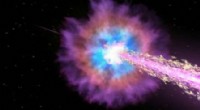
* Supernova Remnants: The explosion of a massive star creates a supernova remnant, which is a nebula filled with incredibly hot gas. Supernova remnants play a key role in the chemical evolution of galaxies, enriching the interstellar medium with even heavier elements.
In summary, nebulae are the birthplace of stars, the building blocks of galaxies, and the engines of ongoing stellar and galactic evolution. They are essential for understanding the formation and evolution of the universe.