Here's what astronomers look for to detect black holes:
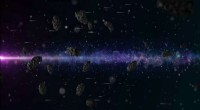
* Gravitational lensing: Black holes are incredibly dense, so they warp the fabric of spacetime around them. This can cause light from objects behind the black hole to bend around it, resulting in a distorted image.
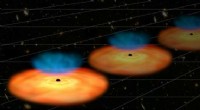
* X-ray emissions: As matter falls into a black hole, it heats up to incredibly high temperatures, emitting powerful X-rays. Astronomers use telescopes to detect these X-ray emissions.
* Orbital motions: By observing the motion of stars and gas clouds near a suspected black hole, astronomers can infer its presence and estimate its mass.
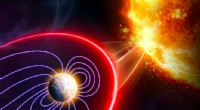
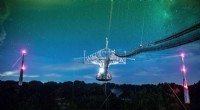
* Radio waves: Some black holes emit powerful radio waves, which astronomers can detect.
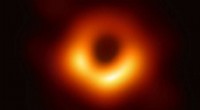
While these methods have been used to detect black holes in other galaxies and even in the center of our own Milky Way galaxy (Sagittarius A*), there's no confirmed evidence of a black hole in the immediate vicinity of our solar system.
It's important to remember that black holes are incredibly difficult to detect directly, as they don't emit light. The evidence we have is based on indirect observations and theoretical models.