Here's why it's hard to be exact:
* We can only observe a tiny fraction of the galaxy: Our telescopes are limited by distance and technology. We can only directly observe a small portion of the galaxy's stars.
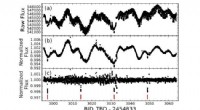
* We detect planets indirectly: Most exoplanets (planets outside our solar system) are discovered using indirect methods like the transit method or the radial velocity method. These methods have limitations and can miss smaller or distant planets.
* We don't know the prevalence of planets around all types of stars: Our current observations are biased towards finding planets around stars similar to our Sun. We need more data to determine how common planetary systems are around other types of stars.
However, based on current observations and statistical models, scientists estimate that nearly every star in the Milky Way likely has at least one planet orbiting it. This means the number of solar systems could be even higher than hundreds of billions.