1. The Beginning: A Giant Cloud
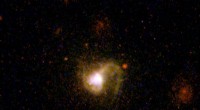
* The Sun started as a vast cloud of gas and dust called a nebula. This nebula was mostly made of hydrogen and helium, the lightest elements in the universe.
2. Gravity Takes Over
* Over millions of years, gravity caused the particles in the nebula to pull closer together. As the cloud contracted, it began to spin faster.
3. Heat and Pressure Build Up
* As the cloud got denser, the particles collided more frequently, generating heat and pressure. The core of the cloud became incredibly hot and dense.
4. Nuclear Fusion Ignites
* When the core reached a temperature of about 15 million degrees Celsius, nuclear fusion began. This is a process where hydrogen atoms fuse together to form helium, releasing enormous amounts of energy.
5. The Sun is Born!
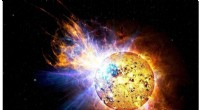
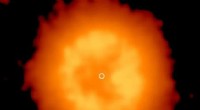
* The energy released by nuclear fusion creates outward pressure that balances the inward pull of gravity. This stable state is what we know as the Sun.
Why does the Sun give off heat and light?
* Nuclear Fusion: The ongoing nuclear fusion reactions in the Sun's core are the primary source of its energy. The energy released is what powers the Sun's light and heat.
* Radiation: The energy from nuclear fusion is released as photons of light, which travel outwards through the Sun's layers and eventually escape into space.
* Convection: Within the Sun, hot gas rises and cooler gas sinks, creating convection currents. This movement helps to distribute the heat and light throughout the Sun's interior.
In summary, the Sun shines because it is powered by a constant process of nuclear fusion in its core, converting hydrogen into helium and releasing tremendous amounts of energy in the form of heat and light.