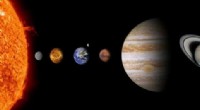
However, his model was not accepted at the time for several reasons:
* Lack of observational evidence: Aristarchus based his theory on logical reasoning and observations of planetary motions, but he lacked the tools and technology to provide concrete evidence for his claims.
* Conflicting with prevailing beliefs: The geocentric model (Earth as the center of the universe) was deeply ingrained in Greek philosophy and astronomy, and supported by the influential philosopher Aristotle.
* Lack of a mechanism to explain the observed phenomena: Aristarchus didn't offer a detailed explanation for how the planets moved around the Sun, which was essential for gaining acceptance.
* Religious objections: The heliocentric model challenged the prevailing religious beliefs of the time, which placed Earth at the center of creation.
It wasn't until the 16th century that Nicolaus Copernicus revived the heliocentric model with more detailed observations and mathematical calculations. Even then, the theory faced significant opposition from the Church and other established scientific authorities.
Therefore, Aristarchus's heliocentric model, while groundbreaking for its time, did not gain widespread acceptance until centuries later due to the limitations of his evidence, the influence of existing beliefs, and the lack of a robust theoretical framework.