Here's a breakdown of the wavelengths Hubble uses:
* Visible light: This is the part of the electromagnetic spectrum that our eyes can see. It's crucial for studying stars, galaxies, and nebulae in detail.
* Ultraviolet light: This type of light has shorter wavelengths than visible light. It's used to study hot, young stars, the composition of interstellar gas, and distant galaxies.
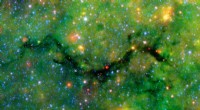
* Near-infrared light: This type of light has longer wavelengths than visible light. It's used to study objects obscured by dust, like protostars and young planetary systems.
It's important to note that Hubble is not designed to observe other types of electromagnetic radiation, such as X-rays or radio waves. These are studied by other space telescopes specifically designed for these wavelengths.