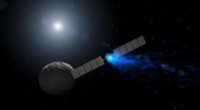
Orbit:
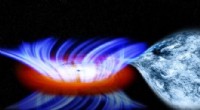
* Definition: The curved path a celestial body takes around another celestial body, usually a larger one due to gravity.
* Example: The Earth orbits the Sun. The Moon orbits the Earth.
* What it affects:
* Year length: The time it takes a celestial body to complete one orbit determines the length of its year.
* Seasons: The tilt of a planet's axis combined with its orbit around the Sun causes seasons.
* Tidal forces: The gravitational pull of a larger celestial body on a smaller one, caused by the orbit, can create tides.
Rotation:
* Definition: The spinning of a celestial body on its axis.
* Example: The Earth rotates on its axis, which is why we have day and night.
* What it affects:
* Day and night: The rotation of a planet creates day and night.
* Equatorial bulge: The centrifugal force caused by rotation can cause a planet to bulge at the equator.
* Magnetic field: The rotation of a planet's core often creates a magnetic field.
In Summary:
* Orbit is about movement around another body, while rotation is about spinning on its own axis.
* Both are important for understanding a celestial body's behavior and its environment.
Let me know if you have any other questions!