Here's why:
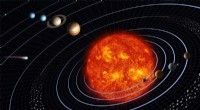
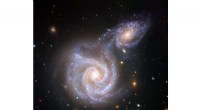
* Galaxies are much more than just planets. They are vast collections of stars, gas, dust, and dark matter held together by gravity. Planetary systems are just one tiny component of a galaxy.
* Clouds are not necessarily collections of planetary systems. They can be made of gas, dust, or even just the remnants of exploded stars.
* The terms "galaxy" and "cloud" are used in different contexts. "Cloud" can refer to a diffuse cloud of gas and dust in space (like a molecular cloud), or to a specific collection of galaxies within a larger structure (like a galaxy cluster).
Here's a better way to understand the difference:
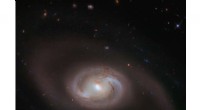
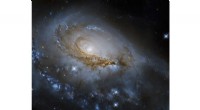
* Galaxies: Are massive, gravitationally bound systems containing billions of stars, gas, dust, and dark matter. They can host many planetary systems within them.
* Clouds: Can refer to many things in space:
* Molecular clouds: Cold, dense regions of gas and dust where stars are born. They may contain material for future planetary systems.
* Nebulas: Clouds of gas and dust that are often visible in the sky. These can be remnants of exploded stars or regions of star formation.
* Galaxy clusters: Large collections of galaxies held together by gravity.
So, instead of focusing on a dividing number, consider these factors:
* Size and mass: Galaxies are far larger and more massive than any individual planetary system or cloud.
* Composition: Galaxies contain stars, gas, dust, and dark matter. Clouds are primarily composed of gas and dust.
* Structure: Galaxies have distinct structures like spiral arms, while clouds are more diffuse.
Let me know if you have other questions about galaxies or clouds!