Newton's Law of Universal Gravitation
* Every object in the universe attracts every other object with a force proportional to the product of their masses and inversely proportional to the square of the distance between their centers.
This means:
* Heavier objects have stronger gravitational pulls.
* Objects closer to each other experience stronger gravitational attraction.
Measuring Mass using Gravity
1. Orbital Motion:
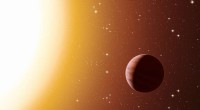
* Planets and moons orbit stars and planets due to gravity. By observing the orbital period (how long it takes to complete one orbit) and the orbital radius (average distance from the central body), we can calculate the mass of the central body using Kepler's Third Law.
2. Gravitational Perturbations:
* The gravitational pull of a massive body can slightly perturb the orbits of other objects. By observing these deviations, we can estimate the mass of the perturbing body. This is how we can measure the mass of planets and even unseen objects like dark matter.
3. Doppler Shifts:
* The gravitational pull of a massive body causes a slight redshift in the light emitted from nearby stars. This is known as the gravitational redshift. By measuring this redshift, we can estimate the mass of the object.
4. Gravitational Lensing:
* Massive objects can bend the path of light passing nearby, causing it to appear distorted or magnified. This phenomenon is called gravitational lensing. By analyzing the shape and size of the lensed image, we can estimate the mass of the lensing object.
Examples:
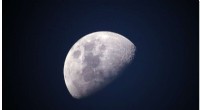
* Earth's Mass: By observing the Moon's orbital period and distance, we can calculate Earth's mass using Kepler's Third Law.
* Jupiter's Mass: By observing the orbital periods and distances of Jupiter's moons, we can calculate Jupiter's mass.
* Black Hole Mass: Gravitational lensing and Doppler shifts observed near black holes allow astronomers to estimate their massive sizes.
Conclusion
Gravity is a powerful tool for understanding the universe. By observing the gravitational effects of celestial bodies, we can measure their masses and gain insights into their composition and evolution.