Here's why:
* Event horizon is not a barrier: The event horizon is a boundary in spacetime where the escape velocity exceeds the speed of light. It's not a physical barrier that particles "bounce off" of.
* Strong gravitational field: The primary force at play near the event horizon is gravity. It overwhelms other forces, including the electromagnetic force responsible for Pauli exclusion.
* Particle interactions: While the Pauli exclusion principle governs the interactions of fermions, it doesn't dictate their behavior in the extreme conditions near a black hole.
What happens to particles near a black hole:
* Spaghettification: The strong gravitational gradient near a black hole stretches objects along the direction of the pull, effectively tearing them apart.
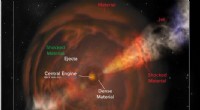
* Inward motion: Particles are drawn towards the singularity at the center of the black hole.
* Hawking radiation: This is a theoretical phenomenon where particles can be emitted from the event horizon due to quantum fluctuations. However, this effect is not directly related to the Pauli exclusion principle.
In summary:
While the Pauli exclusion principle is a fundamental principle in quantum mechanics, it doesn't play a significant role in the behavior of particles near the event horizon of a black hole. The extreme gravitational forces and the singularity at the center dominate the dynamics, making other forces like electromagnetic interactions negligible.