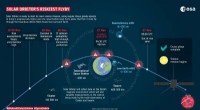
* Earth's Revolution: Earth revolves around the Sun in an elliptical orbit. This means that our perspective on the vast expanse of stars changes as we travel around the Sun.
* Earth's Tilt (Axial Tilt): Earth is tilted on its axis at approximately 23.5 degrees. This tilt causes different parts of the Earth to receive varying amounts of sunlight throughout the year, leading to the seasons. It also influences the apparent position of constellations in the night sky.
* Earth's Rotation: Earth spins on its axis, causing the apparent movement of celestial objects across the sky, including constellations, from east to west.
How it works:
Imagine you're standing on a spinning Earth looking out at the vastness of space. As the Earth rotates, the stars seem to move across the sky, just as the sun appears to rise and set. However, Earth's tilted axis also affects this movement. Because of the tilt, our perspective on the constellations changes throughout the year.
In the Northern Hemisphere, for example, we see constellations like Orion high in the sky during winter months because Earth's tilt positions that region towards the constellations. However, six months later, when Earth is on the opposite side of its orbit, the constellations that were visible during winter are hidden from view due to our planet's tilt.
In summary:
The apparent movement of constellations is a result of the Earth's revolution around the Sun, its axial tilt, and its rotation. This combination of factors creates a unique celestial dance, allowing us to observe different constellations depending on the time of year.