Unique Environment:
* Microgravity: Space offers a near-weightless environment, allowing researchers to study phenomena that are impossible or difficult to replicate on Earth, such as crystal growth, fluid dynamics, and combustion processes.
* Vacuum: The near-perfect vacuum of space allows for experiments free from the interference of air, such as studying materials in extreme environments.
* Cosmic Radiation: Space is exposed to high levels of cosmic radiation, providing an environment for studying its effects on materials and biological organisms.
Observational Advantages:
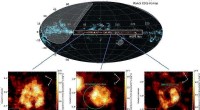
* Clear View of the Universe: Space-based telescopes offer unparalleled views of the universe, free from atmospheric distortion and light pollution, allowing for deeper and clearer observations of planets, stars, and galaxies.
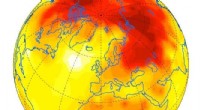
* Global Perspective: Satellites and space stations provide a global perspective, allowing for observation and monitoring of Earth's atmosphere, oceans, and land masses, leading to a better understanding of climate change and other global processes.
Technological Advancement:
* Materials Science: Space research has led to the development of new materials with unique properties, such as high-strength composites and advanced ceramics.
* Life Support Systems: Developing closed-loop life support systems for space travel has advanced our understanding of sustainable living systems and could potentially lead to solutions for resource scarcity on Earth.
Other Benefits:
* Long-Duration Experiments: The long duration of space missions allows for long-term studies that are impractical to conduct on Earth, such as observing the effects of microgravity on human health.
* International Collaboration: Space research often involves collaboration between multiple nations, fostering scientific and technological advancements.
Specific Examples:
* Crystal Growth: Microgravity allows crystals to grow larger and more perfect, leading to breakthroughs in material science and technology.
* Combustion Research: The absence of convection in space allows for the study of flames in a way that is impossible on Earth, leading to safer and more efficient combustion technologies.
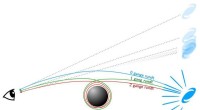
* Fundamental Physics: Space experiments, such as the search for gravitational waves, provide insights into the fundamental laws of nature.
* Earth Observation: Satellite data provides critical information for monitoring weather patterns, tracking climate change, and managing natural resources.
While there are many advantages to conducting experiments in space, there are also significant challenges, such as the high cost, technical complexity, and the need for specialized equipment. Nevertheless, the unique and valuable opportunities that space research offers make it an essential part of scientific advancement.