Size and Mass:
* Andromeda: Larger and more massive than the Milky Way. It has about 1 trillion stars, compared to the Milky Way's 200-400 billion.
* Milky Way: Smaller and less massive.
Structure:
* Andromeda: More tightly wound spiral arms than the Milky Way, with more prominent dust lanes.
* Milky Way: Less tightly wound spiral arms and has a more pronounced central bulge.
Age:
* Andromeda: Slightly older than the Milky Way, formed about 2 billion years earlier.
* Milky Way: Formed about 13.6 billion years ago.
Supermassive Black Hole:
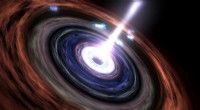
* Andromeda: Has a supermassive black hole at its center, estimated to be about 110 million times the mass of the Sun.
* Milky Way: Also has a supermassive black hole at its center, estimated to be about 4 million times the mass of the Sun.
Distance:
* Andromeda: The closest major galaxy to the Milky Way, located about 2.5 million light-years away.
* Milky Way: Our home galaxy.
Other Notable Differences:
* Gas and Dust: Andromeda has more gas and dust than the Milky Way, which affects its star formation rate.
* Star Formation Rate: Andromeda has a higher star formation rate than the Milky Way.
* Halo: Andromeda's halo is larger and more extensive than the Milky Way's, containing more globular clusters.
Interesting Fact:
The Milky Way and Andromeda are on a collision course and are expected to merge in about 4 billion years, forming a giant elliptical galaxy.
In summary:
Andromeda is a larger, more massive, and slightly older galaxy with a higher star formation rate than the Milky Way. However, both galaxies are spiral galaxies with supermassive black holes at their centers and are expected to merge in the distant future.