Stars:
* Main Sequence Stars: The most common type of star, including our Sun. They fuse hydrogen into helium, producing light and heat.
* Giant Stars: These stars are much larger and brighter than main sequence stars, having exhausted their hydrogen fuel and expanded.
* Supergiant Stars: Even larger and brighter than giants, these stars are nearing the end of their lives.
* White Dwarfs: The dense, hot remnants of stars like our Sun after they have shed their outer layers.
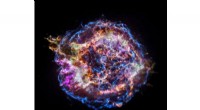
* Neutron Stars: Extremely dense and compact objects formed from the collapse of massive stars.
* Black Holes: Regions of spacetime where gravity is so strong that nothing, not even light, can escape.
Planets:
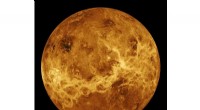
* Terrestrial Planets: Rocky planets with solid surfaces, like Earth, Mars, Venus, and Mercury.
* Gas Giants: Massive planets composed primarily of hydrogen and helium, like Jupiter, Saturn, Uranus, and Neptune.
* Dwarf Planets: Smaller than planets and often lack the gravitational dominance of their region, like Pluto, Ceres, Eris, and Makemake.
* Exoplanets: Planets orbiting stars outside our solar system.
Other Celestial Bodies:
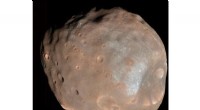
* Moons: Natural satellites orbiting planets.
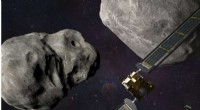
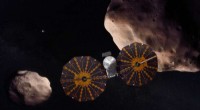
* Asteroids: Rocky bodies found mainly in the asteroid belt between Mars and Jupiter.
* Comets: Icy bodies that release gas and dust when they approach the Sun.
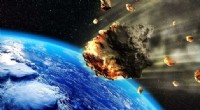
* Meteoroids: Small rocky or metallic bodies in space.
* Meteors: Meteoroids that enter Earth's atmosphere and burn up, creating a streak of light.
* Meteorites: Meteoroids that survive their passage through the atmosphere and land on Earth.
* Nebulae: Clouds of gas and dust in space, often where stars are born.
* Galaxies: Massive collections of stars, gas, dust, and dark matter, held together by gravity.
* Quasars: Extremely luminous and distant objects powered by supermassive black holes at the centers of galaxies.
* Pulsars: Rapidly rotating neutron stars that emit beams of radiation.
Dark Matter and Dark Energy:
* Dark Matter: A mysterious substance that interacts with ordinary matter through gravity but does not emit light.
* Dark Energy: A hypothetical energy field that is thought to be driving the accelerated expansion of the universe.
This is just a brief overview. The universe is constantly revealing new and fascinating celestial bodies, and our understanding of them is always evolving.