Scale:
* Size Discrepancies: It's impossible to accurately represent the vast size differences between planets and the distances between them. Even with a very large space, the planets would have to be tiny, and the distances between them would still be enormous.
* Relative Size: Even if you use proportionally sized balls, the Sun would be incredibly large, likely dwarfing the rest of the model.
Material:
* Styrofoam is Not Realistic: Styrofoam doesn't accurately depict the composition of planets. Planets are made of rock, gas, or ice, not a lightweight, porous material.
* No Gravity or Orbits: Styrofoam balls simply sit on a table or hang from a ceiling. They don't demonstrate the gravitational forces that hold the solar system together or the planets' orbits.
Other Considerations:
* Difficult to Represent Orbits: It's challenging to show the elliptical orbits of planets accurately with simple models.
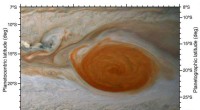
* Lack of Color and Detail: Styrofoam balls don't capture the unique colors and surface features of planets.
* Limited Information: While a styrofoam model might show relative sizes and positions, it can't convey information about atmospheres, temperatures, magnetic fields, or other important aspects of planets.
Alternatives:
* Interactive Software: Computer simulations allow you to visualize the solar system in a more realistic way, including accurate scale, orbits, and details about each planet.
* Scale Models: While extremely difficult to create, scale models can offer a better representation of size and distance. However, they require significant space.
Overall, styrofoam ball models can be useful for a basic introduction to the solar system, but they have significant limitations when it comes to accurately depicting the scale, composition, and dynamics of our celestial neighborhood.