Here's why:
* "Earth-like" is a broad term: It can mean different things to different scientists. Some might consider a planet Earth-like if it's rocky and in the habitable zone (where liquid water could exist). Others might require the planet to have a similar size, mass, and atmosphere to Earth.
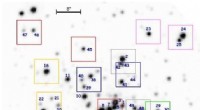
* Difficult to characterize exoplanets: We don't have direct images of most exoplanets. We find them through indirect methods like:
* Transit method: Observing the dimming of a star's light as a planet passes in front of it.
* Radial velocity method: Observing the "wobble" in a star's motion caused by the gravitational pull of a planet.
* Microlensing: Using the gravitational lensing effect of a star to detect a planet passing in front of a more distant star.
* Limited information: These methods mainly give us information about the planet's size, mass, and orbital period. It's very difficult to determine if an exoplanet has an atmosphere, water, or even if it's rocky.
While we haven't found many truly Earth-like planets, we are finding a lot of potentially habitable planets. These planets are promising targets for further study, and future telescopes like the James Webb Space Telescope will help us gather more information and potentially confirm if they are truly Earth-like.
It's important to remember that the search for Earth-like planets is a continuous process, and our understanding of these distant worlds is constantly evolving.