Here's why a regular telescope won't do:
* The Sun's Brightness: The corona is incredibly faint compared to the Sun's surface. Regular telescopes would be overwhelmed by the intense light from the Sun, making it impossible to see the corona.
* Scattered Light: Even if you could block out the Sun's surface, the Earth's atmosphere scatters sunlight, obscuring the corona.
How Coronagraphs Work:
* Blocking the Sun's Disk: Coronagraphs have a physical disk that blocks the Sun's surface, allowing only the light from the corona to pass through.
* Reducing Scattered Light: They also use sophisticated optical systems to minimize scattered light from the telescope itself and the atmosphere.
Examples of Coronagraphs:
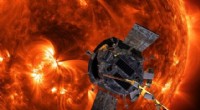
* SOHO (Solar and Heliospheric Observatory): A spacecraft with several coronagraphs that have provided incredible images of the corona for decades.
* LASCO (Large Angle and Spectrometric Coronagraph): A coronagraph on SOHO that captures wide-angle views of the corona.
* Ground-based Coronagraphs: Several coronagraphs are also located on Earth, allowing scientists to study the corona from the ground.
Why Study the Corona?
The corona is a dynamic region of the Sun, filled with hot plasma and magnetic fields. Studying it helps us understand:
* Space Weather: The corona is the source of solar flares and coronal mass ejections (CMEs), which can affect satellites and power grids on Earth.
* Solar Physics: The corona's extreme temperatures and magnetic activity are still not fully understood, making it a fascinating area of research.
So, the next time you see a picture of the Sun's corona, remember that it was captured by a specialized telescope called a coronagraph!