* The Limits of Telescopes: While telescopes can see incredibly faint objects, there's a limit to how faint they can detect. Even the most powerful telescopes can only see stars up to a certain distance.
* Star Brightness: Stars vary greatly in brightness. A very bright star close to us might be easier to detect than a faint star much further away.
* Intervening Matter: Dust and gas clouds in our galaxy can obscure distant stars, making them harder to see.
However, we can talk about some of the farthest stars that have been observed:
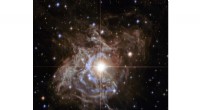
* The Hubble Space Telescope: Hubble has observed stars in the Andromeda Galaxy, our nearest galactic neighbor, which is about 2.5 million light-years away. However, these stars are extremely bright and massive.
* The James Webb Space Telescope: JWST, with its infrared capabilities, can see through dust and gas clouds better than Hubble. It has observed stars in even more distant galaxies, but these stars are likely to be very faint.
* "Individual" Stars: Some reports claim that individual stars have been observed much farther away, with estimates reaching billions of light-years. However, the claims often rely on interpretations of faint, distant objects.
The bottom line: While there are incredibly distant stars being observed, pinning down the "furthest" is tricky due to the limitations of our technology and the complexities of the universe.