1. Gathering Light:
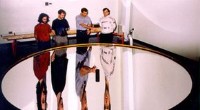
* Mirrors or lenses: Telescopes use either mirrors (reflecting telescopes) or lenses (refracting telescopes) to collect light.
* Aperture: The size of the light-gathering surface (mirror or lens) is called the aperture. A larger aperture collects more light, allowing you to see fainter objects.
2. Focusing Light:
* Mirrors: In reflecting telescopes, the primary mirror reflects the incoming light to a secondary mirror, which then directs it to the eyepiece or camera.
* Lenses: In refracting telescopes, the primary lens bends the light rays to a focal point, where they are viewed through an eyepiece or captured by a camera.
3. Magnifying and Viewing:
* Eyepiece: An eyepiece is a small lens that magnifies the image formed by the primary mirror or lens, making the distant object appear larger.
* Camera: Instead of an eyepiece, a camera can be used to capture the image of the object. The light is focused onto a sensor that records the information as digital data.
Types of Information Collected:
* Visible light: This is the light we can see with our eyes and is what most optical telescopes collect.
* Infrared light: This is heat radiation and can be used to study objects that emit little visible light.
* Ultraviolet light: This light is beyond the visible spectrum and can reveal details about hot, energetic objects.
* Radio waves: These waves can be used to study objects that emit radio signals, such as pulsars and galaxies.
* X-rays and gamma rays: These high-energy waves can be used to study the most energetic events in the universe, such as supernovae and black holes.
In summary, telescopes collect information by:
1. Gathering light from distant objects using mirrors or lenses.
2. Focusing the light to create an image.
3. Magnifying the image using an eyepiece or camera.
4. Recording the information as visible light, infrared, ultraviolet, radio waves, X-rays, or gamma rays.