1. Solar Eclipse:
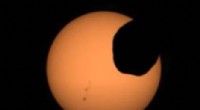
* When the Moon is directly between the Sun and Earth, it casts a shadow on Earth, causing a solar eclipse.
* This only happens during a New Moon phase, when the Moon's illuminated side faces away from Earth.
2. Lunar Eclipse:
* When the Earth is directly between the Sun and Moon, it casts a shadow on the Moon, causing a lunar eclipse.
* This only happens during a Full Moon phase, when the Moon's illuminated side faces Earth.
3. Spring Tides:
* When the Sun, Earth, and Moon are aligned, their gravitational forces combine, creating extra-high tides called spring tides.
* This occurs both during a New Moon and Full Moon, regardless of whether there is an eclipse.
4. Neap Tides:
* When the Sun and Moon are at right angles to each other, their gravitational forces partially cancel out, creating lower tides called neap tides.
* This occurs during a Quarter Moon phase.
It's important to note:
* Not every alignment of the Sun, Earth, and Moon results in an eclipse. The Moon's orbit is slightly tilted compared to Earth's orbit around the Sun. This tilt means the Moon often passes above or below the Sun's path, preventing an eclipse.
* Spring tides and neap tides are cyclical, happening every two weeks due to the Moon's orbit around Earth.