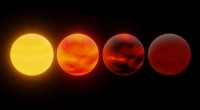
1. Planets orbiting a star: These are the largest bodies that directly orbit a star. Examples include Jupiter and Saturn in our solar system. These are not satellites, but rather primary celestial bodies in their own right.
2. Moons orbiting planets: These are the bodies you're likely referring to as "satellite bodies." The largest moon in our solar system is Ganymede, which orbits Jupiter. It's even larger than the planet Mercury! Other large moons include Titan (Saturn), Callisto (Jupiter), and Io (Jupiter).
3. Exoplanets and their moons: We have discovered thousands of exoplanets, some of which are much larger than Jupiter. However, we are still in the early stages of detecting exomoons, and their sizes are largely unknown.
Therefore, the answer depends on what you're asking:
* Largest bodies orbiting a star: Planets like Jupiter and Saturn are the largest, not moons.
* Largest moons in our solar system: Ganymede is the largest.
* Largest exomoons: We have limited data, but exomoons could potentially be larger than our largest moons.
It's important to note that while moons are satellites, not all satellites are moons. For example, artificial satellites like the International Space Station also orbit Earth.