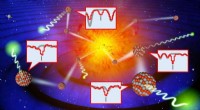
* Electromagnetic Spectrum: Solar radiation encompasses a wide range of wavelengths, collectively known as the electromagnetic spectrum. This spectrum includes:
* Gamma rays: The most energetic form, produced by nuclear reactions on the sun.
* X-rays: Also very energetic, contributing to solar flares and coronal mass ejections.
* Ultraviolet (UV) radiation: Invisible to the human eye, but can cause sunburns and damage DNA.
* Visible light: The portion we see as colors.
* Infrared (IR) radiation: Heat radiation.
* Microwaves: Used in communication and radar.
* Radio waves: The longest wavelengths, used for communication and astronomy.
* Traveling Through Space: Electromagnetic waves don't need a medium to travel like sound waves do. They can travel through the vacuum of space because they are self-propagating disturbances in the electric and magnetic fields.
* Speed of Light: All electromagnetic radiation, including solar radiation, travels at the speed of light in a vacuum, which is approximately 299,792,458 meters per second (186,282 miles per second).
In Summary:
The sun emits a broad range of electromagnetic radiation, which travels through space as self-propagating waves of energy at the speed of light. This radiation encompasses various forms, including visible light, heat, ultraviolet radiation, and more, providing energy and light to Earth and other planets.