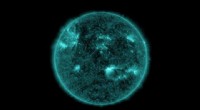
* How stars form, evolve, and die: This includes understanding stellar interiors, nuclear fusion, and supernova explosions.
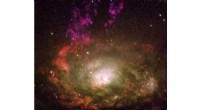
* The structure and evolution of galaxies: Astrophysicists study how galaxies form, interact, and evolve over time.
* The origin and evolution of the universe: They investigate the Big Bang, cosmic microwave background radiation, and the expansion of the universe.
* Black holes and other exotic objects: They study the properties of black holes, neutron stars, and other extreme objects in space.
* Exoplanets and the possibility of life beyond Earth: They search for planets around other stars and explore the conditions necessary for life to arise.
Astrophysicists use a wide range of tools and techniques, including:
* Telescopes: These range from ground-based optical telescopes to space-based observatories like the Hubble Space Telescope.
* Computer simulations: These help astrophysicists model complex physical processes and test different theories.
* Mathematical models: They use mathematical equations to describe the behavior of stars, galaxies, and the universe.
* Data analysis: They analyze vast amounts of data collected by telescopes and other instruments.
In summary, astrophysicists are explorers of the cosmos, using the laws of physics to unravel the mysteries of the universe.