* Luminosity vs. Apparent Brightness: We perceive stars as bright or dim based on their *apparent brightness*, which depends on both their luminosity (the actual amount of light they emit) and their distance from us.
* Variable Stars: Some stars, called variable stars, change their luminosity over time. So, a star that's currently producing the most light might be surpassed by another star later.
* Massive Stars: The most luminous stars are generally the most massive. These massive stars live short, bright lives, but their output can be staggering.
To answer your question properly, we'd need to know:
* Are we talking about total light output (luminosity) or apparent brightness?
* Are we considering all stars in the universe, or just within a specific region?
* Are we looking at a specific moment in time, or considering the average output over time?
For example:
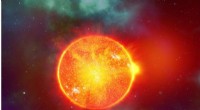
* The Sun is the most luminous star in our solar system, but not the most luminous star in the universe.
* VY Canis Majoris is a red hypergiant considered one of the largest and most luminous stars known.
* R136a1 is the most massive and luminous star known so far.
So, the answer depends on the specifics of the question!