The Giant Impact:
* Theia collides with Earth: The impact was incredibly violent, likely melting both Theia and a portion of the Earth's mantle.
* Debris ejected: The collision sent a massive amount of debris, including molten rock and vaporized material, into orbit around Earth.
* Accretion: Over time, the debris gradually clumped together under the influence of gravity, forming the Moon.
Evidence Supporting the Giant Impact Hypothesis:
* Lunar composition: The Moon's composition is similar to Earth's mantle, but with less iron. This suggests that the Moon was formed from material that came from Earth's outer layers.
* Lunar orbit: The Moon's orbit is unusually tilted and eccentric compared to other moons in the solar system. This could be explained by the chaotic nature of the impact.
* Isotopes: The Moon and Earth share some unique isotopic signatures, suggesting a common origin.
Other Theories:
While the Giant Impact Hypothesis is the most prevalent, other theories have been proposed:
* Capture theory: The Moon was formed elsewhere in the solar system and was later captured by Earth's gravity.
* Co-formation theory: The Moon formed alongside Earth from the same disk of gas and dust.
Current Research:
Ongoing research using lunar samples and computer simulations continues to refine our understanding of the Moon's formation.
In Summary:
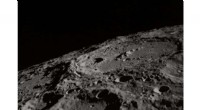
The Giant Impact Hypothesis provides the most compelling explanation for the Moon's existence. The collision of a Mars-sized object with Earth billions of years ago likely ejected massive amounts of debris that eventually coalesced to form our celestial neighbor.