* Subtending an arc: This concept typically refers to a line segment (like a chord) or an angle that is formed within a circle. The line or angle "subtends" the arc, meaning it cuts off or defines a portion of the circle's circumference.
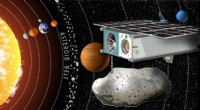
* Planetary orbits: Planetary orbits are elliptical, not perfectly circular. While an ellipse can be described using circles (as in the "focus" definition), the orbit itself isn't a circle.
However, there are ways to relate orbits to angles and arcs:
1. Orbital Angle: The position of a planet in its orbit can be described by an angle relative to a fixed reference point (like the perihelion, the point of closest approach to the Sun). This angle changes continuously as the planet moves around the Sun.
2. Orbital Arc: A specific section of the planet's orbit can be considered an arc, similar to a segment of a circle. You can calculate the length of this arc or the angle it subtends, but these are not fundamental concepts in describing the orbit itself.
3. Kepler's Laws: Kepler's Laws of Planetary Motion describe how planets move around the Sun. These laws don't directly involve "subtended arcs," but they do relate the time a planet spends in different parts of its orbit, which can be visualized as arcs.
In summary: While the term "subtend" is not directly applicable to a planetary orbit, you can analyze its position, motion, and specific sections (like an arc) using angles and other geometric concepts.