* Understanding Scientific Notation: The number you provided is more easily written in scientific notation: 6 x 10^24 kg. This is a shorthand way of saying 6 followed by 24 zeros.
* Comparing to Planet Masses: Here are the approximate masses of the planets in our solar system in kilograms (using scientific notation):
* Mercury: 3.3 x 10^23 kg
* Venus: 4.87 x 10^24 kg
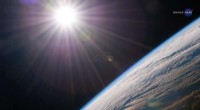
* Earth: 5.97 x 10^24 kg
* Mars: 6.42 x 10^23 kg
* Jupiter: 1.898 x 10^27 kg
* Saturn: 5.68 x 10^26 kg
* Uranus: 8.68 x 10^25 kg
* Neptune: 1.024 x 10^26 kg
* The Closest Match: The planet with a mass closest to 6 x 10^24 kg is Earth.
Important Note: The exact mass of planets can vary slightly depending on the source. The values above are approximate.