The Hammer and Feather Experiment
* The Concept: The experiment demonstrates that in a vacuum (where air resistance is negligible), objects of different masses fall at the same rate.
* The Result: Both the hammer and feather reach the ground simultaneously.
Why This Happens on Both Earth and the Moon
* Gravity: The force of gravity acts equally on all objects, regardless of their mass. This means that a feather and a hammer experience the same gravitational acceleration.
* Air Resistance: On Earth, air resistance plays a significant role. It slows down lighter objects like feathers more than heavier objects like hammers. In a vacuum, this factor is eliminated.
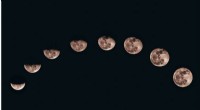
* The Moon: The moon also has gravity (about 1/6th of Earth's), but it has no atmosphere. Therefore, the hammer and feather experiment would yield the same result on the moon – they would fall at the same rate and reach the ground simultaneously.
The Misconception:
The idea that the hammer and feather experiment works differently on the moon might stem from the fact that the moon's gravity is weaker. However, the *relative* gravitational pull on both the feather and the hammer is the same, leading to the same acceleration.
In Conclusion: The hammer and feather experiment demonstrates a fundamental principle of physics: In the absence of air resistance, objects fall at the same rate regardless of their mass. This principle applies equally on Earth and the moon.