Sun's Size and Mass:
* Diameter: 1.392 million kilometers (865,000 miles)
* Mass: 1.989 × 10^30 kilograms (4.385 × 10^30 pounds)
Comparison with Other Space Objects:
Planets:
* Earth: The Sun's diameter is 109 times that of Earth. Its mass is 333,000 times greater.
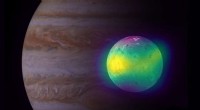
* Jupiter: The Sun's diameter is 10 times that of Jupiter. Its mass is 1,047 times greater.
* Other planets: The Sun dwarfs all other planets in our solar system in both size and mass.
Stars:
* Red dwarfs: Many red dwarfs are much smaller and less massive than the Sun. Some are only a tenth the Sun's diameter and a tenth of its mass.
* Blue giants: Blue giants are much larger and more massive than the Sun. They can be tens of times the Sun's diameter and hundreds of times its mass.
* Supergiants: Supergiants are the largest stars known. They can have diameters hundreds of times greater than the Sun's, and millions of times its mass.
Other Objects:
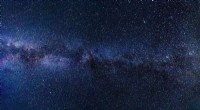
* Galaxies: Galaxies are vast collections of stars, gas, dust, and dark matter. Our own galaxy, the Milky Way, is about 100,000 light-years across, containing billions of stars. The Sun is just one of these stars.
* Black holes: Black holes are extremely dense objects with such strong gravity that nothing, not even light, can escape. Some black holes can be millions of times more massive than the Sun.
Key Points:
* The Sun is a medium-sized star in our Milky Way galaxy.
* While the Sun is massive, it is dwarfed by many other stars and objects in the universe.
* The Sun's size and mass are crucial to our solar system, providing the energy and gravity that sustains life on Earth.
Visualizing the Size Comparison:
To get a better sense of scale, imagine the Sun as a beach ball. Earth would be the size of a marble, Jupiter would be the size of a grapefruit, and the nearest star would be about 300 miles away. This helps visualize the vastness of space and how relatively small our Sun is in the grand scheme of things.