* Gamma-ray telescopes: These telescopes observe high-energy photons, such as those emitted by supernovae and active galactic nuclei.
* X-ray telescopes: These telescopes detect X-rays, which can come from sources like black holes and neutron stars.
* Radio telescopes: These telescopes observe radio waves, which are emitted by various astronomical objects, including pulsars and galaxies.
While Hubble can indirectly infer some information about radiation, it's not its primary focus or capability.
However, Hubble does have a role in studying radiation:
* Observing the effects of radiation: Hubble can observe the effects of radiation on celestial objects, such as the erosion of planetary atmospheres or the ionization of gas clouds.
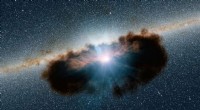
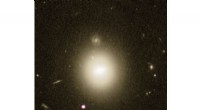
* Observing objects that emit radiation: Hubble can observe objects like active galactic nuclei (AGN) that emit large amounts of radiation across the electromagnetic spectrum. While Hubble doesn't directly measure the full spectrum of radiation from these objects, it can provide valuable information about their properties and behavior.
In summary, the Hubble Space Telescope is not designed to measure radiation directly. However, it plays a role in studying radiation by observing its effects and observing objects that emit radiation.