Here's a simplified explanation:
1. Giant cloud of gas and dust: The solar system began as a huge, cold, and slowly rotating cloud of gas and dust, mainly hydrogen and helium.
2. Gravity pulls it together: Over millions of years, gravity caused the cloud to contract and spin faster. As the cloud got smaller, it heated up.
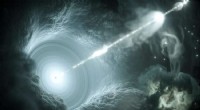
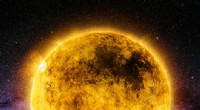
3. Protostar forms: At the center, a protostar formed, a hot, dense core of gas. This eventually became our Sun.
4. Planets form: As the protostar continued to grow, it blew away excess material, leaving a rotating disk of gas and dust. Within this disk, particles began to stick together due to electrostatic forces, eventually forming larger clumps. These clumps grew even larger, forming the planets and other bodies in our solar system.
5. Solar System stabilizes: Over time, the planets in the disk cleared their orbits, leaving us with the solar system we know today.
Key points about the nebular hypothesis:
* It explains the orderly motion of planets in our solar system (all orbiting in the same direction).
* It explains the composition of planets (rocky planets closer to the Sun, gas giants further away).
* It can be used to explain the formation of other star systems as well.
There's still ongoing research and debate about the details of the nebular hypothesis, but it provides a strong framework for understanding the birth of our solar system.