Stars:
* Energy source: Stars produce their own light and heat through nuclear fusion. In their core, hydrogen atoms fuse to form helium, releasing enormous amounts of energy.
* Structure: Stars are giant balls of hot, glowing gas, primarily hydrogen and helium.
* Shape: Due to their immense gravity, stars are generally spherical.
* Lifespan: Stars have a lifespan that can range from millions to trillions of years, depending on their size and mass. They eventually evolve, changing in size and brightness over time.
* Examples: The Sun, Sirius, Betelgeuse.
Planets:
* Energy source: Planets do not produce their own light or heat. They reflect light from a star.
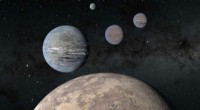
* Structure: Planets are solid, liquid, or gaseous bodies that orbit a star. They can be composed of rock, gas, ice, or a combination of these.
* Shape: Planets can be spherical or irregular in shape, depending on their size and composition.
* Lifespan: Planets are generally thought to be as old as their host star, potentially lasting for billions of years.
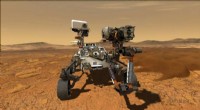
* Examples: Earth, Mars, Jupiter, Saturn.
Here's a simple analogy: Imagine a campfire. The campfire itself (the star) generates its own light and heat. If you throw a log on the fire (the planet), it will reflect the light and heat from the fire but doesn't produce any itself.
In summary: Stars are active, self-luminous objects that generate energy, while planets are passive, non-luminous objects that orbit stars.