1. Understanding the Moon:
* Lunar Geology and Composition: Missions brought back lunar samples, allowing scientists to analyze the Moon's composition, age, and history. This revealed its volcanic origin, its layered structure, and the presence of water ice at the poles.
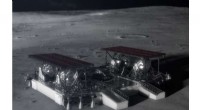
* Lunar Surface Environment: Studying the lunar surface helped understand its gravitational field, radiation environment, and the effects of micrometeoroids.
* Lunar Atmosphere: Apollo missions confirmed the existence of a very thin lunar atmosphere, called an exosphere, and studied its composition.
2. Technological Advancements:
* Rocketry and Propulsion: The Saturn V rocket, used for the Apollo missions, was a technological marvel, pushing the boundaries of rocket science and paving the way for future deep space exploration.
* Spacecraft Design and Engineering: The Apollo spacecraft design incorporated innovations like the command and service modules, lunar module, and advanced life support systems.
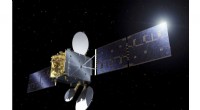
* Remote Sensing and Telemetry: Apollo missions refined techniques for remotely sensing the Moon and transmitting data back to Earth, laying the groundwork for future planetary exploration.
3. Scientific Knowledge and Applications:
* Earth Science: Observing the Earth from lunar orbit provided unique perspectives on atmospheric phenomena, plate tectonics, and the Earth's magnetic field.
* Astrophysics: The Moon's lack of an atmosphere made it an ideal location for astronomical observations, including lunar occultation studies, which helped understand the size and shape of stars.
* Human Spaceflight: Apollo missions demonstrated the feasibility of human spaceflight, paved the way for the International Space Station, and inspired generations of scientists and engineers.
4. International Collaboration:
* Scientific Exchange: The Apollo missions fostered international cooperation in space science, leading to knowledge sharing and collaborative research projects.
Legacy of Apollo:
The Apollo missions continue to inspire advancements in space science. Their impact is evident in the ongoing exploration of the Moon, Mars, and beyond, through missions like the Artemis program, which aims to establish a long-term human presence on the Moon.
The Apollo missions left a lasting legacy, proving humanity's capacity to reach for the stars and unlock the mysteries of the cosmos.