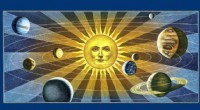
The Sun:
* Energy source: The Sun is the primary source of energy for Earth. Its radiation provides light and warmth, driving photosynthesis, weather patterns, and ultimately, all life on Earth.
* Gravity: The Sun's immense gravity holds Earth in its orbit, keeping us at a safe distance to support life.
* Seasons: The tilt of Earth's axis, combined with its orbit around the Sun, causes the seasons we experience.
The Moon:
* Tidal forces: The Moon's gravitational pull on Earth's oceans causes tides. This force is strongest on the side of Earth facing the Moon, and also on the opposite side.
* Stabilizes Earth's axis: The Moon's gravity helps to stabilize Earth's axis, preventing drastic shifts that would disrupt climate and life on Earth.
* Lunar phases: The Moon's phases are caused by the changing angles at which we see the sunlit portion of the Moon as it orbits Earth.
* Light reflection: The Moon reflects sunlight, providing light at night.
Sun and Moon Together:
* Solar and lunar eclipses: These events happen when the Sun, Earth, and Moon align in specific ways. A solar eclipse occurs when the Moon passes between the Sun and Earth, blocking out the Sun's light. A lunar eclipse occurs when the Earth passes between the Sun and Moon, casting its shadow on the Moon.
* Influence on Earth's evolution: The Sun and Moon have played crucial roles in the evolution of life on Earth, from shaping early oceans to influencing the development of organisms.
Key Points:
* The Sun is a star, a giant ball of hot gas that emits energy.
* The Moon is Earth's natural satellite, a relatively small, rocky body that orbits our planet.
* Their gravitational interactions and influence on each other are critical for life on Earth.
Understanding the relationship between the Sun, Moon, and Earth is essential for comprehending the fundamental forces that shape our planet and the life it supports.