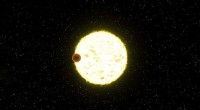
* Hubble Space Telescope: Hubble has taken numerous images of Betelgeuse, capturing its changing size and shape over time. This has helped us understand its pulsation cycle and potential for a supernova.
* Very Large Telescope (VLT): This ground-based observatory in Chile has used interferometry (combining light from multiple telescopes) to create high-resolution images of Betelgeuse's surface. This allowed us to see its surface features and track the evolution of its dust cloud.
* Atacama Large Millimeter/submillimeter Array (ALMA): ALMA, also located in Chile, has observed Betelgeuse at millimeter wavelengths. This gives us insights into the star's outer layers and the way it interacts with its surroundings.
* Spitzer Space Telescope: Spitzer, which is now retired, observed Betelgeuse in infrared wavelengths. This allowed scientists to study the dust and gas surrounding the star and better understand its evolution.
It's important to note: No spacecraft has been designed to specifically orbit Betelgeuse due to the immense distance and technical challenges involved. However, the telescopes mentioned above have provided us with a wealth of information about this fascinating star.