Here's why:
* Outer Solar Nebula: The outer region of the solar nebula was colder and less dense than the inner region. This allowed for the formation of ice, water, and other volatile compounds.
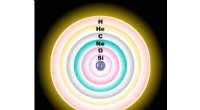
* Gas Giants: Jupiter and Saturn are gas giants, meaning they are primarily composed of hydrogen and helium, the lightest elements. These elements were abundant in the outer solar nebula.
* Core Accretion Model: The current theory of planet formation suggests that gas giants like Jupiter formed through a process called core accretion. A solid core first formed from dust and ice particles, and its gravity attracted a massive amount of gas from the surrounding nebula.
While Uranus and Neptune are also gas giants, they are sometimes referred to as "ice giants" because they have a higher proportion of heavier elements like oxygen, carbon, and nitrogen compared to Jupiter and Saturn.