* All stars emit light: By definition, stars are massive, luminous balls of plasma held together by gravity. They produce their own light through nuclear fusion.
* What we can see depends on factors: Whether we can *see* a star depends on:
* Brightness: Some stars are simply too faint for our eyes to detect without specialized tools.
* Distance: The farther a star is, the fainter it appears.
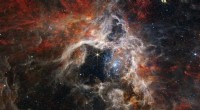
* Dust and gas: Interstellar dust and gas can obscure starlight.
* Wavelengths: Some stars emit light primarily in wavelengths we can't see, such as infrared or ultraviolet.
So, instead of invisible stars, we talk about:
* Faint stars: Stars that are too dim for the naked eye, requiring telescopes to observe.
* Distant stars: Stars that are so far away that their light is too weak to reach us.
* Stars obscured by dust and gas: Stars hidden behind clouds of interstellar matter.
* Stars that emit mainly invisible light: Stars whose light is primarily in wavelengths we can't see.
Even these "invisible" stars can be studied using telescopes that detect various wavelengths of light.