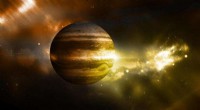
1. Lack of sufficient material: Rings are made up of dust, ice, and rock debris. The terrestrial planets are relatively small and rocky, with less material orbiting them compared to the massive gas giants. They also formed closer to the Sun, which means the solar wind would have blown away much of the light material that could have formed rings.
2. Strong gravitational pull: The terrestrial planets have a stronger gravitational pull than the gas giants. This means they are more likely to capture any debris that comes close, pulling it into their atmosphere or onto their surface rather than allowing it to form a stable ring system.
3. Active geological processes: The terrestrial planets are geologically active, with volcanoes, earthquakes, and tectonic plates. These processes can disrupt any rings that might form, pulling material into the planet's atmosphere or scattering it away.
4. Lack of large moons: Many scientists believe that the rings of the gas giants are formed from the debris of shattered moons. The terrestrial planets generally have smaller moons, and they are unlikely to have suffered the catastrophic collisions necessary to create ring material.
5. Formation history: During the early solar system, the inner planets were bombarded with asteroids and comets. These impacts likely cleared out any debris that might have been present, preventing ring formation.
While the terrestrial planets don't have rings in the same way as the gas giants, they do have some faint dust rings. These are much less prominent and are thought to be the result of micrometeoroid impacts on the planets' surfaces.
Overall, the combination of these factors has prevented the terrestrial planets from developing the spectacular rings that we see around the gas giants.