Mars has a very different climate from Earth's. Here's a summary of its key features:
Thin Atmosphere: Mars's atmosphere is incredibly thin, about 100 times thinner than Earth's. This leads to:
* Low Atmospheric Pressure: This makes it hard for liquid water to exist on the surface.
* Weak Greenhouse Effect: The thin atmosphere traps very little heat from the sun, resulting in extremely cold temperatures.
Cold Temperatures: Mars is very cold, with average temperatures around -63°C (-81°F).
* Extreme Temperature Fluctuations: Because of the thin atmosphere, there are large temperature swings between day and night, and between the equator and the poles.
Dry Conditions: Mars is a very dry planet.
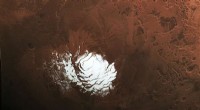
* Water Ice: Some water ice is present at the poles and in the subsurface.
* Very Little Liquid Water: The thin atmosphere and low temperatures prevent liquid water from existing on the surface for long.
Dust Storms: Mars experiences frequent dust storms, some of which can engulf the entire planet. These storms can last for weeks or even months.
Seasons: Mars has seasons, but they are about twice as long as Earth's due to its longer orbital period.
Other Features:
* Carbon Dioxide Atmosphere: Mars's atmosphere is primarily composed of carbon dioxide.
* Weak Magnetic Field: This lack of a strong magnetic field leaves the planet vulnerable to harmful solar radiation.
Overall: Mars's climate is harsh and inhospitable to life as we know it. Its thin atmosphere, cold temperatures, and dry conditions make it a challenging environment for exploration and potential future colonization.