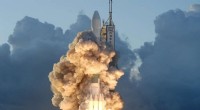
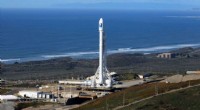
1. The Rocket:
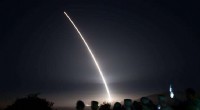
* The Heart of the Launch: A powerful rocket is the primary vehicle for sending satellites into orbit. These rockets are incredibly complex machines, engineered to produce immense thrust to overcome Earth's gravity.
* Types of Rockets: There are various types of rockets used, each with its strengths and weaknesses. Some common examples include:
* Delta IV Heavy (US): Powerful and reliable for large payloads.
* Falcon 9 (SpaceX): Reusable and cost-effective, popular for commercial launches.
* Soyuz (Russia): Long-standing and well-tested, known for its reliability.
* Ariane 5 (Europe): Heavily used for commercial and scientific missions.
2. The Launch Process:
* Preparation: The satellite is carefully integrated with the rocket, often atop a specially designed payload fairing that protects it during the initial ascent.
* Liftoff: The rocket's engines ignite, generating tremendous force that lifts the spacecraft off the launch pad.
* Ascent: The rocket climbs through the atmosphere, shedding its spent stages (sections of the rocket) as it gains altitude.
* Staging: The rocket typically has multiple stages. Each stage burns its fuel and then detaches, leaving the remaining stages to continue the ascent.
* Orbit Insertion: Once the final stage reaches the desired altitude, its engine ignites again to propel the satellite into its final orbit.
3. Orbit:
* Types of Orbits: Satellites are placed in various orbits depending on their mission:
* Low Earth Orbit (LEO): Close to Earth, around 160-2,000 km, used for Earth observation, communication, and research.
* Geostationary Orbit (GEO): 35,786 km above the equator, satellites remain stationary relative to a point on Earth, ideal for communication.
* Medium Earth Orbit (MEO): Between LEO and GEO, used for navigation and communication.
* Trajectory: Once the satellite reaches its target orbit, it will travel around the Earth at a specific speed and inclination (angle relative to the equator).
4. Deployment:
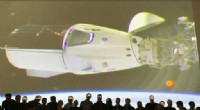
* Final Separation: The satellite is carefully released from the rocket's final stage.
* Deployment: The satellite may deploy solar panels, antennas, and other components, preparing it for its mission.
Important Considerations:
* Trajectory Planning: Precise calculations are required to ensure the satellite reaches the correct orbit and remains there.
* Launch Window: Launch windows are determined by factors such as the position of the Earth and the satellite's desired orbit.
* Tracking and Control: Once in orbit, satellites are constantly monitored and controlled from ground stations.
Simplified Analogy:
Imagine launching a ball in the air. It takes a lot of force to throw the ball high enough for it to stay up for a while. A rocket is like a super-powered throwing arm that sends the satellite into space with enough energy to stay in orbit around the Earth.