Here's why:
* Continuous spectrum: This type of spectrum shows all colors of the rainbow, without any gaps or dark lines. It's produced by hot, dense objects like the surface of stars.
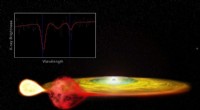
* Absorption spectrum: This spectrum shows dark lines against a continuous background. These lines occur when certain wavelengths of light are absorbed by atoms in a star's atmosphere.
* Emission spectrum: This spectrum shows bright lines against a dark background. It's produced when excited atoms in a gas emit light at specific wavelengths.
While all stars have some absorption lines in their spectra (due to their atmospheres), the overall appearance is still a continuous spectrum. This is because the majority of light comes from the hot, dense surface of the star, which produces a continuous spectrum.
It's important to note that the specific colors and intensities of a star's continuous spectrum depend on its temperature and composition.