Here's a breakdown:
* Visible light: This is the range of light that our eyes can see, making it a crucial part of Hubble's observations.
* Near-ultraviolet light: This is light with slightly shorter wavelengths than visible light, which allows Hubble to see objects that are very hot or emit a lot of energy.
* Near-infrared light: This is light with slightly longer wavelengths than visible light, which allows Hubble to see through dust clouds and observe objects that are very distant or cool.
Hubble doesn't collect all types of electromagnetic radiation, such as:
* Radio waves: These have much longer wavelengths and are collected by radio telescopes.
* X-rays: These have much shorter wavelengths and are collected by X-ray telescopes.
* Gamma rays: These have even shorter wavelengths than X-rays and are collected by gamma-ray telescopes.
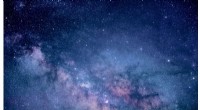
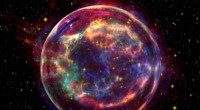
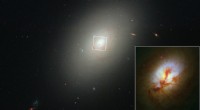
Hubble's ability to collect visible light and near-ultraviolet and near-infrared light makes it a powerful tool for exploring the universe. It has provided us with stunning images and valuable data about planets, stars, galaxies, and even the early universe.