Here's a more detailed explanation:
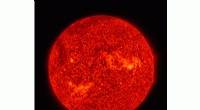
Stars are indeed glowing spheres of hot gas, primarily hydrogen and helium.
* Hot: The core of a star is incredibly hot, reaching millions of degrees Celsius. This heat is generated by nuclear fusion.
* Gas: The intense heat causes the atoms in the star to be stripped of their electrons, creating a plasma, which is a state of matter where ions and electrons move freely.
* Glowing: The nuclear fusion process releases enormous amounts of energy, primarily in the form of light and heat. This energy radiates outward, making the star glow.
Important points:
* Gravity: Gravity plays a crucial role in holding the star together. The immense gravitational pull of the star's mass keeps the hot gas from dispersing into space.
* Nuclear Fusion: The energy that powers a star comes from nuclear fusion, a process where lighter elements like hydrogen are fused together to form heavier elements like helium, releasing energy in the process.
So, while a glowing sphere of hot gas is a good starting point, it's important to remember the other crucial factors that contribute to a star's existence and behavior.