Appearance:
* A giant, swirling ball of gas: Jupiter is primarily composed of hydrogen and helium, with swirling clouds of ammonia, methane, and water ice forming its distinctive bands and spots.
* The Great Red Spot: This iconic feature is a gigantic storm, larger than Earth, that has raged for centuries.
* Vibrant colors: Its atmosphere displays stunning shades of orange, brown, yellow, and white, making it a captivating celestial object.
Characteristics:
* Massive: Jupiter is over 300 times more massive than Earth and has a diameter over 11 times larger.
* Rapid rotation: It rotates incredibly fast, completing a full rotation in just under 10 hours, which contributes to its strong magnetic field.
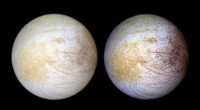
* Many moons: Jupiter boasts over 75 known moons, including the four largest – Io, Europa, Ganymede, and Callisto – which are known as the Galilean moons.
* Strong gravity: Its immense size and mass give it a powerful gravitational pull, which affects the orbits of other objects in the solar system.
Significance:
* A key player in the solar system's evolution: Its gravity has influenced the formation of planets and asteroids.
* A potential target for future exploration: Scientists are eager to study Jupiter's atmosphere, moons, and magnetic field to learn more about the origins and evolution of our solar system.
Overall, Jupiter is a truly awe-inspiring and majestic planet, showcasing the incredible diversity and wonder of our solar system.