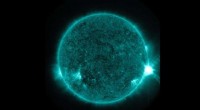
* Stars are incredibly far away: Stars are massive balls of hot gas, located light-years away from Earth. The closest star to our solar system, Proxima Centauri, is 4.24 light-years away. That's a distance of roughly 25 trillion miles.
* Gravity keeps them in place: Stars are held in place by the immense gravitational pull of their host galaxy. Even if a star somehow got ejected from its galaxy, it would likely end up orbiting another star or black hole, not falling directly to Earth.
* What we see as falling stars are meteors: The "falling stars" we see are actually meteors, small pieces of rock and dust that enter Earth's atmosphere and burn up due to friction. These are not actual stars, but rather remnants of asteroids, comets, or other celestial objects.
Hypothetical scenario:
Let's imagine a scenario where a star somehow managed to break free from its galaxy and head towards Earth. Even though it's highly improbable, here's what could happen:
* The star's gravitational pull would cause immense disruption: As the star approached Earth, its gravity would start pulling on our planet, causing tides to become extreme, volcanic eruptions, and earthquakes.
* The Earth could be pulled into the star: Depending on the star's size and trajectory, it could eventually pull Earth into its gravitational field, leading to the planet's destruction.
* The star would light up the sky: The approaching star would be incredibly bright, illuminating the night sky like a massive, blazing sun.
However, as mentioned earlier, this is highly unlikely. Stars falling from the sky is a concept that exists more in fiction than in reality.