Planets: These are celestial bodies that orbit a star and are large enough to have cleared their orbital path of other objects. They are often described as being "round" due to their own gravity. Examples include Earth, Mars, and Jupiter.
Dwarf planets: These are smaller than planets and may not have cleared their orbital path. They can be round or irregularly shaped. Examples include Pluto and Eris.
Moons: These are natural satellites that orbit planets, not stars. They are much smaller than planets, but can still be quite large. Examples include our moon, Ganymede (a moon of Jupiter), and Titan (a moon of Saturn).
Comets: These are icy bodies that orbit stars in highly elliptical paths. They are generally much smaller than planets or moons, but can be visible to the naked eye when they come close to the sun.
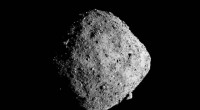
Asteroids: These are rocky bodies that orbit stars, typically in the asteroid belt between Mars and Jupiter. They are much smaller than planets, but can still be quite large.
Other possibilities:
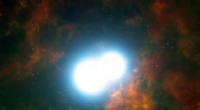
* Stars: Some stars can be found orbiting other stars in binary systems or multiple star systems.
* Brown dwarfs: These are "failed stars" that are too small to sustain nuclear fusion. They can be found orbiting other stars.
To give you a more precise answer, please clarify what you are looking for. For example, are you looking for an object that is:
* larger than a planet?
* a specific type of object, like a gas giant?
* currently orbiting a star in our solar system?