Natural Luminous Sources:
* The Sun: This is the primary source of light and heat for the entire solar system. It is a giant ball of hot gas that produces light through nuclear fusion.
* Stars: While not part of our solar system, the countless stars in our galaxy and beyond are visible from Earth and contribute to the night sky's illumination.
* Planets: Planets themselves do not emit light. They reflect sunlight, making them visible. However, some planets have specific features that contribute to their luminosity:
* Jupiter: Its Great Red Spot, a massive storm, appears brighter due to high-altitude clouds reflecting sunlight.
* Saturn: The rings of Saturn, composed of ice and rock, are highly reflective and make the planet appear brighter.
* Moons: Like planets, moons reflect sunlight. Some moons, such as Jupiter's moon Io, have active volcanoes that erupt with incandescent lava, providing a temporary source of light.
* Aurorae: Occur on planets with magnetic fields (like Earth, Jupiter, Saturn, and even Uranus) when charged particles from the Sun interact with the planet's atmosphere. These vibrant displays of light are spectacular.
Artificial Luminous Sources:
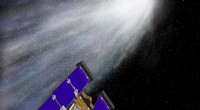
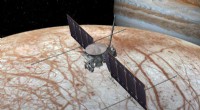
* Spacecraft: While not "luminous" in the traditional sense, spacecraft can reflect sunlight and are sometimes equipped with powerful lights for tasks like taking pictures or illuminating the surface of other celestial bodies.
Important Note: Some objects within the solar system, such as asteroids and comets, can reflect sunlight, making them visible, but they are not considered "luminous" sources as they do not produce their own light.