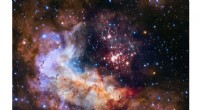
1. The Nebular Hypothesis: This is the widely accepted theory for the formation of our solar system. It suggests that the solar system began as a vast, rotating cloud of gas and dust called a nebula.
2. Gravitational Collapse: Over time, the nebula began to collapse under its own gravity. As it collapsed, the cloud spun faster, much like a figure skater pulling in their arms.
3. Formation of the Sun: The center of the collapsing cloud became denser and hotter, eventually igniting nuclear fusion and forming the Sun.
4. Planetary Disk Formation: The remaining material in the nebula, swirling around the Sun, flattened into a disk.
5. Accretion: Particles in this disk collided and stuck together, growing larger and larger. This process, called accretion, eventually led to the formation of the planets.
6. Conserved Angular Momentum: The original rotation of the nebula is what led to the formation of the spinning disk. As the planets formed, they inherited this angular momentum, causing them to orbit the Sun in the same direction as the original rotation of the nebula.
Exceptions:
While all major planets in our solar system orbit the Sun in the same direction, there are a few exceptions:
* Venus: While Venus orbits the Sun in the same direction, its rotation is retrograde, meaning it spins in the opposite direction.
* Uranus: Uranus is also tilted on its side, so its rotation is almost perpendicular to the plane of its orbit.
These exceptions are thought to be the result of major collisions or gravitational interactions that occurred early in the solar system's history.
In summary: The common orbital direction of the planets is a direct consequence of the conservation of angular momentum from the original rotating nebula that gave birth to our solar system.