Here's a breakdown:
* Earth's Spin: Our planet spins on its axis, completing one full rotation every 24 hours. This rotation is what causes day and night.
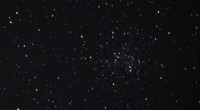
* Perspective: From our perspective on Earth, as we rotate, we see the stars moving across the sky. They are actually very far away and remain in relatively fixed positions, but our changing viewpoint makes them seem to shift.
* Circular Motion: The apparent motion of stars is generally circular, reflecting the circular path of Earth's rotation.
* North Star: One exception to this circular motion is the North Star (Polaris). It appears nearly stationary because it's located almost directly above Earth's North Pole.
Important Note: The stars do move in the vastness of space, but these motions are extremely slow compared to Earth's rotation. The movement we see in the night sky is primarily due to our planet's spin.