Here's why:
* The Big Bang: The universe began with the Big Bang, which occurred approximately 13.8 billion years ago.
* Expansion: Since the Big Bang, the universe has been expanding. This means that the distance between galaxies is increasing over time.
* Light Travel Time: The light we see from distant objects started its journey billions of years ago. By the time it reaches us, the objects have moved even further away.
* Observable Universe: The observable universe is the portion of the universe that we can see from Earth. It has a radius of about 13.8 billion light-years, representing the maximum distance light has had time to travel to us since the Big Bang.
However, it's important to note:
* Cosmic Horizon: There are parts of the universe that are beyond our observable horizon. We can't see them because light from these regions hasn't had enough time to reach us.
* Future Observations: As technology advances, we will be able to see further into the universe and learn more about its history.
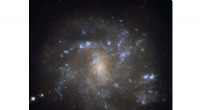
The furthest object currently observed is the GN-z11 galaxy, which is estimated to be about 13.4 billion light-years away. This observation offers a glimpse into the very early universe, just a few hundred million years after the Big Bang.